


In my clinic I meet people who have been carrying this question for years before they say it out loud. Do I have gender dysphoria, or is it something else? It is not a question with a clean answer, and the discomfort of not knowing is part of why people delay asking it.
This piece is for anyone sitting with that question. The aim is not to give you a diagnosis. Only a careful clinical assessment for gender dysphoria can do that. The aim is to help you understand what gender dysphoria actually is, the signs that point towards it, and how to think clearly about whether it fits your experience.
What gender dysphoria actually feels like
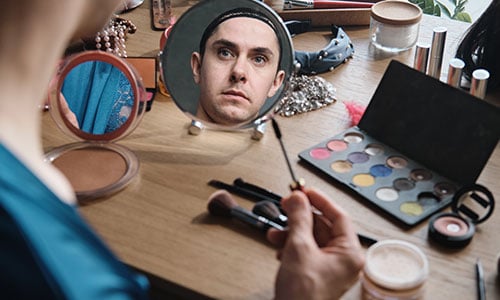
People in my clinic rarely describe gender dysphoria in clinical language. They describe it in physical terms. A cold wave that washes over them when they catch their reflection. A sense of looking in the mirror and seeing the wrong face. The feeling of performing in a play that never ends, where the role does not match who they are. One person described it to me as a kind of chronic pain that gnaws at them without any clear physical cause.
That embodied quality is one of the things that distinguishes it. Gender dysphoria is not just a thought about gender. It is a felt sense of incongruence between the gender someone experiences themselves to be and the body or social role they are living in.
“I’m not saying that sexual trauma causes this. But a lot of the people who have very severe clinical gender dysphoria have experienced some really awful things related to their body.”
— Dr Becky Spelman
The clinical definition
The DSM-5-TR defines gender dysphoria as a marked incongruence between someone’s experienced or expressed gender and the gender they were assigned at birth, lasting at least six months, and causing significant distress or impairment in daily life. In 2022 the World Health Organization’s ICD-11 reframed the same experience as gender incongruence and moved it out of the chapter on mental disorders, placing it under conditions related to sexual health.
The two frameworks disagree on whether gender dysphoria should be classified as a disorder, but they agree on the core experience. There is a persistent mismatch between someone’s sense of their own gender and the body or social position they find themselves in, and that mismatch is causing them real distress.
Gender dysphoria vs gender nonconformity
This is a distinction people often get tangled in. Gender nonconformity is a way of presenting or behaving that does not match the conventional expectations attached to someone’s gender. A man wearing a dress, a woman with a shaved head, a child who refuses to play with the toys associated with their assigned sex. These are choices about how to live in the world.
Gender dysphoria is something different. It is not about whether someone wants to wear dresses or trousers. It is about whether they experience themselves as fundamentally a different gender from the one they were assigned at birth, and whether that experience is causing sustained distress. You can be gender nonconforming without dysphoria, and you can have dysphoria while presenting in conventionally gendered ways.
Signs to look out for in adults
The signs of gender dysphoria show up in different combinations in different people. But four patterns come up repeatedly in clinical practice. The more of these you recognise in your own experience, and the longer they have been present, the more likely it is that what you are dealing with is gender dysphoria rather than something else.
A persistent unease with your sexed body
A specific, ongoing discomfort with the primary or secondary sex characteristics of your body. Breasts, voice, body hair, genitals, body shape, height. This often intensifies during or after puberty, when those features develop more fully. The distress is not vague body dissatisfaction. It is specifically about the features that mark you as the gender you were assigned at birth.
A felt sense that the gender role does not fit
An ongoing experience that the social role you are living in as a man or a woman does not match who you actually are. This can show up as a quiet, persistent wrongness in everyday situations. Being addressed by your name or pronouns, getting dressed, being seen by others. It is the gendered nature of these moments that creates the friction, not the moments themselves.
Gender euphoria when treated as another gender
A relief or quiet joy when you are perceived, addressed, or treated as the gender you experience yourself to be. People often describe this as the clearest signal. The contrast between the everyday low-level distress and the sudden relief of being seen correctly can be one of the most diagnostic experiences. Some people only realise the dysphoria was there once they feel it lift.
Preoccupying thoughts about a different gender
Recurring, sustained thoughts about what it would be like to live as a different gender. Not as fleeting curiosity, but as an ongoing pull. People often describe years of intrusive imagining before they let themselves say it out loud.
Questions worth asking yourself
When people in my clinic are trying to work out whether what they are feeling is gender dysphoria or something else, these are the questions I ask them. They are worth sitting with on your own as well.
- When did the feelings start? Did they begin before puberty, during it, or later? What else was happening in your life at the time?
- Do the feelings stay roughly constant, or do they fluctuate with depression, anxiety, or what is going on around you?
- Is your distress about specific gendered features of your body, or about your appearance more generally?
- Is it about how others perceive you, how you feel internally, or both?
- Have you ever felt a clear relief or rightness when treated as a different gender, even briefly?
- If you imagine your body without the features that distress you, does that imagining bring relief, or does a different distress move into its place?
When the threshold is met for a diagnosis
Two things matter clinically. How long the feelings have been present, and how much they are affecting daily life.
The diagnostic criteria require the feelings to have been there for at least six months in adults, though in clinical reality people usually describe them as having been around for years. Brief periods of questioning, or a phase of curiosity, are not what gender dysphoria refers to. It is a persistent experience, not a passing one.
The other criterion is impairment. The distress must be enough to interfere with social life, work, relationships, or other important areas of daily functioning. Without that impairment, the diagnostic threshold is not met.
When something else might be going on
Several other experiences can produce something that looks or feels like gender dysphoria, or sit alongside it. The Cass Review, an independent NHS report published in 2024, was clear that thorough assessment should consider all of these possibilities, particularly when more than one is in play.
|
Experience |
How it can look like or sit alongside gender dysphoria |
|
Trauma, particularly sexual trauma |
Body and gender distress with roots in unresolved trauma. A 2018 study by Giovanardi and colleagues found 56% of adults with gender dysphoria reported four or more types of childhood trauma. Association, not cause. People presenting with both gender dysphoria and PTSD benefit from careful assessment of both, since body distress can have more than one source. |
|
Autism |
A 2023 meta-analysis found around 11% of people with gender dysphoria are also autistic, three to ten times the general rate. Being autistic does not invalidate anyone’s gender experience, but a thorough autism assessment can help clarify what is going on, particularly where the two are tangled together. |
|
Body dysmorphic disorder |
Preoccupation with a specific perceived flaw in appearance rather than gender as a whole. The distress is feature-focused rather than gender-focused. |
|
Dissociation from the body |
After significant trauma, the body can feel unsafe or unfamiliar. This kind of dissociation can resemble gender dysphoria, especially around body parts involved in the trauma. |
|
Distress about sexual orientation |
In environments where same-sex attraction is not accepted, the wish that being a different gender would make the attraction acceptable can present as gender confusion. |
Any of these can co-occur with gender dysphoria or be mistaken for it. A careful assessment looks at the full picture rather than treating any one part of it in isolation. You can read more about how body dysmorphic disorder differs in our dedicated guide.
Voices from the community
The accounts below are taken from real online community discussions about gender dysphoria. Names and identifying details have been changed to preserve anonymity, but the experiences are drawn from real user accounts.
Sarah, 28: It felt like coming home
Sarah spent years uncertain before trying feminine presentation as an experiment. She felt a kind of relief she had never felt before, what she now calls a hangover effect when she went back to her old role. The relief got more consistent. Three years post-transition, she describes her body as finally feeling like hers. In her words, I am not someone who got carried away. I am someone who finally let myself listen.
James, 33: I wish someone had asked about my childhood first
James thought he was a trans woman for several years and started transition before pausing. Through trauma-focused therapy he came to understand that his hatred of his body was rooted in childhood sexual abuse he had never spoken about. I wish a therapist had screened for what happened to me before affirming what I thought it meant, he says. I needed to do the trauma work first.
Alex, 22: I am still working it out
Alex is autistic and questioning. Their concern is not that no one believes them, but that no one will sit with them in the not-knowing. I do not want fast affirmation and I do not want fast dismissal, they say. I want someone who will help me work out what is autistic hyperfocus and what is real.
How The Private Therapy Clinic can help
If anything in this piece reflects something you have been feeling, the most useful next step is usually to talk to someone who can take the time to understand the full picture. At The Private Therapy Clinic we offer assessment and therapy for gender dysphoria and transgender issues, with clinicians experienced in working across the kinds of questions this piece raises. That means careful attention to trauma, autism, mental health, and other factors that can sit alongside or look like gender dysphoria, and supporting you in whatever direction the work needs to go.
We offer a 15-minute consultation if you would like to talk through your situation before deciding anything else. There is no obligation to go further than that conversation.