



Free NHS ADHD & Autism Assessments for Children in Staffordshire
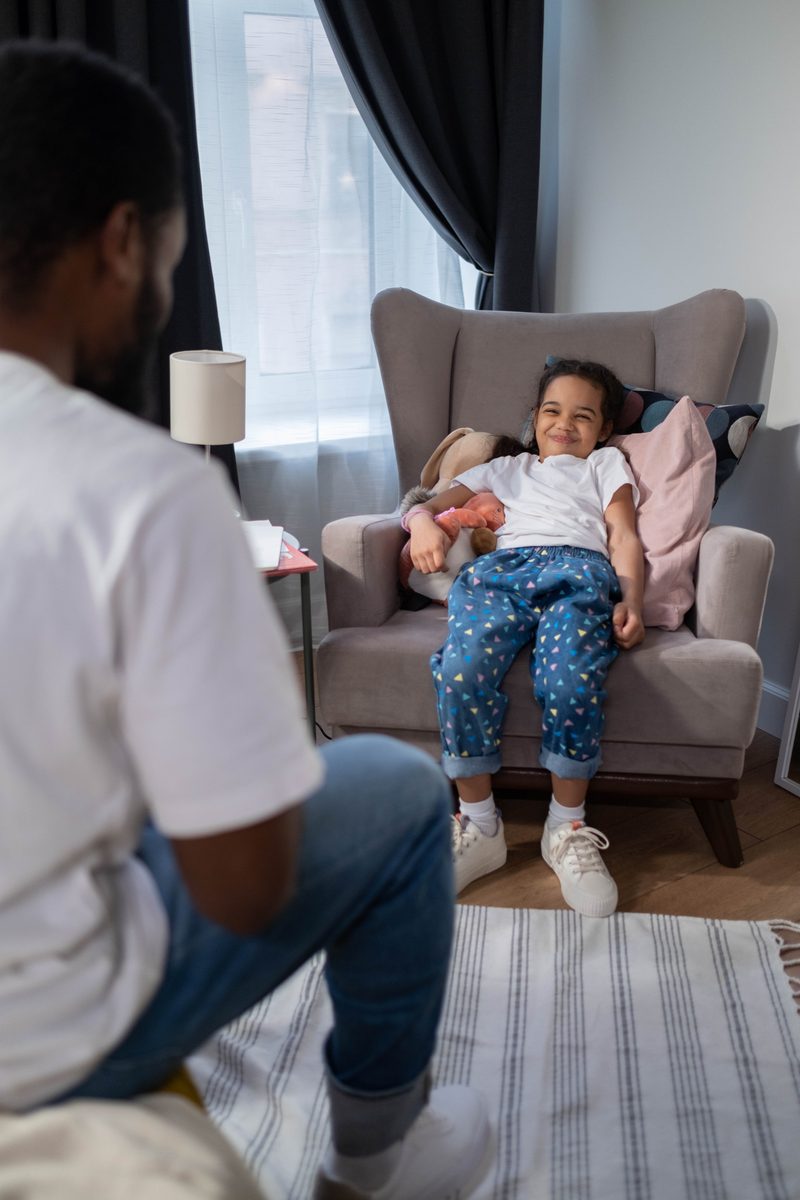
These assessments are NHS-funded through Right to Choose for children aged 6 to 18 with a GP in the Staffordshire and Stoke-on-Trent ICB area. Your child is seen face to face at our Stafford clinic, and there is no cost to your family.


Who Can Access This Service
Your child must meet all four of the following criteria.
- ✓ Aged 6 to 18
Your child is aged between 6 and 18 - ✓ GP in Staffordshire or Stoke-on-Trent
Your child's GP practice is in the Staffordshire and Stoke-on-Trent ICB area - ✓ Clinically appropriate
Your child's GP agrees a referral for an ADHD or autism assessment is clinically appropriate - GP referral required
Referrals must come from your child's GP. Self-referrals are not accepted
Already on the NHS waiting list? If your child is waiting with MPFT or North Staffordshire Combined Healthcare, you can still ask your GP to refer them to us.
GP outside Staffordshire? This page covers the Staffordshire and Stoke-on-Trent ICB area. For GPs elsewhere in England, see Right to Choose.
Where Your Child Will Be Seen in Stafford
Your child's appointment takes place in person at our clinic in Stafford town centre. The parent or carer interview happens online.
The Colonnade, 9 Eastgate Street
Stafford ST16 2NQ Get directions →
Getting Here
- TrainAbout 10 to 15 minutes' walk from Stafford station.
- Car and parkingThere's no parking at the clinic. Aldi and B&M (5 to 10 minutes' walk) offer 2 hours' free parking, and Tesco (10 to 15 minutes' walk) offers 3 hours. There's also a long-stay car park on North Walls that can be booked online.
- BusSeveral town-centre bus stops are a few minutes' walk away, including Gatehouse Theatre on Eastgate Street.
- AccessibilityThe building has some steps and isn't fully accessible. If your child needs step-free access or other adjustments, tell us on the referral form and we'll arrange a suitable room.
Travelling From Elsewhere in Staffordshire
- By trainAbout 20 to 35 minutes from Stoke-on-Trent, Stone, Rugeley and Lichfield, including the walk from Stafford station. From Burton upon Trent, allow 45 minutes to an hour, with one change.
- By busAbout 25 to 35 minutes on the direct bus from Cannock, and 50 minutes to an hour on the direct bus from Uttoxeter.
- By carAbout 20 to 30 minutes from Stone, Cannock, Rugeley, Uttoxeter and Stoke-on-Trent. About 35 to 40 minutes from Newcastle-under-Lyme and Lichfield, and 50 minutes to an hour from Burton upon Trent and Leek.
Journey times vary by day and time of travel. Check Google Maps or National Rail before you set off.
What Happens Online and What Happens in Stafford
Parent interview and medication appointments
Your developmental history interview with our clinician takes place by video call. If your child goes on to start ADHD medication, those appointments are online too.
Your child's appointment
Your child's assessment appointment, including the ADOS-2 observation for autism, takes place face to face at Tudor House. If an online appointment would be a better reasonable adjustment for your child, we can arrange this where clinically appropriate.
How to Access This Service
Eight steps from download to diagnosis. Every step is spelled out below.
Download the Referral Form
Download our referral form using the button below. The form has a section for you to complete as the parent or carer, and a section for your child's GP.
Complete Your Section
Fill in the parent or carer section of the form. This covers basic information about your child and the concerns that prompted you to seek an assessment.
Book an Appointment With Your Child's GP
Take the completed form to your child's GP. The GP will review it, complete their section, and submit the referral to us. Your GP will also need to agree in advance to shared care, in case your child needs ADHD medication. You can say:
“I'd like to use my NHS Right to Choose to refer my child to Private Therapy Clinic in Stafford for an ADHD, autism or combined assessment.”
We Receive the Referral
Once we receive the referral from your GP, our team will make initial contact within 48 hours.
Questionnaires and Information Gathering
We will send you questionnaires to complete, and we also send a questionnaire to your child's school. The assessment cannot proceed until all required documentation is returned, and the 2-week assessment window depends on prompt returns from both parents and schools.
Assessment Appointment
Your child's assessment will be carried out face to face by a qualified clinician at our Stafford clinic. If an online appointment would be a better reasonable adjustment for your child, we can arrange this where clinically appropriate.
Multidisciplinary Team (MDT) Review
Your appointments will usually have taken place with different clinicians who make up a multidisciplinary team, headed by an appropriately qualified clinician (the MDT lead). The MDT lead and the team review all the assessment elements together: the referral information, parent and school questionnaires, the parent interview, and the in-person assessment results. The team agrees on the outcome together before it goes forward.
Outcome and Written Report
Once the MDT has agreed the outcome, the clinician who carried out your parent interview will share it with you in a feedback call. You will receive a written diagnostic report within 6 weeks of the assessment, which can be shared with your child's GP, school, and other professionals.
How Long It Takes
| Stage | Timeframe |
|---|---|
| Initial contact after referral received | Within 48 hours |
| Assessment appointment offered | Within 2 weeks of referral |
| MDT review and outcome communicated | Within 4 weeks of assessment |
| Written report | Within 6 weeks of assessment |
Please note: These timeframes assume all questionnaires are returned within the expected window. If parent or school questionnaires are returned late, the assessment, outcome or report may be delayed.
ADHD, Autism and Combined Assessments for Children
Carried out by our multidisciplinary clinical team. Your child's appointment is at our Stafford clinic; the parent interview takes place online.
All assessments are:
- Carried out by an appropriately qualified multidisciplinary clinical team
- Designed to be person-centred, with reasonable adjustments where needed
- Using the ADOS-2 (gold standard) for every autism assessment
The ADHD assessment follows NICE guideline NG87 and involves several stages. Here is what to expect.
After we receive your GP's referral, we send you standardised questionnaires to complete. We also send a questionnaire to your child's school for their class teacher or SENCO to complete. These cover your child's behaviour, attention, emotional regulation, and daily functioning across different settings. We screen this information before the appointment to make sure the assessment is a good fit for your child. The assessment cannot go ahead until all questionnaires are returned.
The parent or carer interview takes place online. This is the DIVA-5 interview for ADHD, covering your child's developmental history from birth: early milestones, behaviour at home and school, academic progress, friendships, sleep, appetite, and any previous concerns raised by teachers or other professionals. The interview typically takes 60 minutes.
Your child attends a face-to-face appointment at our Stafford clinic. This is a semi-structured clinical session that observes attention, impulsivity, hyperactivity, and how your child responds to tasks and instructions. For younger children, this may include structured play-based activities. For older children and teenagers, it involves a semi-structured clinical interview adapted to their age.
Your appointments will usually have taken place with different clinicians who make up a multidisciplinary team, headed by an appropriately qualified clinician. The MDT lead reviews all the assessment elements together with the team: the referral information, parent and school questionnaires, the DIVA-5 parent interview, and the in-person assessment results. The team agrees the outcome together before it goes forward.
Once the MDT has agreed the outcome, the clinician who carried out your parent interview shares it with you in a feedback call. You then receive a written diagnostic report within about 6 weeks of the assessment. The report includes the findings, the clinical reasoning, and recommendations. A copy is sent to your child's GP. You can share the report with your child's school and other professionals.
If ADHD is diagnosed: medication pathway
If ADHD is diagnosed, the first step is psychoeducation. This is a series of sessions that help you and your child understand the condition and the available treatment options. Psychoeducation is a mandatory part of the NHS pathway and must be completed before medication can be considered. This is a NICE requirement, not a delay.
If medication is clinically appropriate, we handle initiation and titration with regular monitoring (weight, blood pressure, side effects, symptom response) until your child is stable. Once stable, we arrange a shared care agreement with your child's GP for ongoing prescribing and annual reviews. Medication appointments take place online, and your child's GP agrees to shared care in advance, when they make the referral.
The autism assessment follows NICE guideline CG128 and uses the ADOS-2 (Autism Diagnostic Observation Schedule) for every assessment. Here is what to expect.
After we receive your GP's referral, we send you questionnaires covering your child's communication, social interaction, sensory responses, and behavioural patterns. We also send a questionnaire to your child's school for the class teacher or SENCO to complete. We screen this information before the appointment to make sure the assessment is a good fit for your child. The assessment cannot go ahead until all questionnaires are returned.
The parent or carer interview takes place online. This is the ADI-R (Autism Diagnostic Interview-Revised), covering your child's development from birth. It explores early communication, social development, play, sensory sensitivities, routines, friendships, and how your child manages change. The interview typically takes 90 minutes.
The ADOS-2 is a structured, face-to-face observation carried out with your child at our Stafford clinic. It is widely regarded as the gold standard for autism assessment. The ADOS-2 is tailored to your child's age and language level and involves a series of activities designed to observe communication, social interaction, imaginative play, and repetitive behaviours. It typically takes 40 to 60 minutes.
Your appointments will usually have taken place with different clinicians who make up a multidisciplinary team, headed by an appropriately qualified clinician. The MDT lead reviews all the assessment elements together with the team: the referral information, parent and school questionnaires, the ADI-R parent interview, and the ADOS-2 results. The team agrees the outcome together before it goes forward.
Once the MDT has agreed the outcome, the clinician who carried out your parent interview shares it with you in a feedback call. If autism is diagnosed, they explain what this means for your child and what support is available. You then receive a written report within about 6 weeks of the assessment, including the ADOS-2 results, the findings, the clinical reasoning, and specific recommendations for support at home and school. This can include guidance on reasonable adjustments, Education, Health and Care Plan (EHCP) applications, and signposting to local services in Staffordshire and Stoke-on-Trent. A copy is sent to your child's GP.
There is no medication component to an autism diagnosis. The report focuses on understanding your child's needs and practical recommendations for support.
If there are concerns about both ADHD and autism, your child can be assessed for both conditions in a single, combined process.
The dual assessment combines both pathways described above. It includes the parent interviews (DIVA-5 for ADHD and ADI-R for autism), the in-person appointment at our Stafford clinic, the ADOS-2 for the autism component, and parent and school questionnaires. All assessment elements are reviewed together by the multidisciplinary team before an outcome is agreed.
Both conditions are assessed under a single referral, by the same clinical team, without repeating the background information-gathering. This reduces the overall time to diagnosis and avoids separate assessment processes for your child.
The outcome may be a diagnosis of ADHD only, autism only, both, or neither. Each outcome is explained clearly, and the written report covers the findings for both conditions.
If ADHD is diagnosed as part of a dual assessment, the same medication pathway applies: psychoeducation first, then medication initiation and titration if clinically appropriate.
If your child already has an ADHD diagnosis from another provider and needs help with starting or adjusting medication, your GP can refer them to us through this route.
Your GP submits a referral including a copy of your child's original ADHD diagnostic report. This confirms the diagnosis was made by an appropriately qualified clinician. No new diagnostic assessment is needed.
Our multidisciplinary team reviews the diagnostic report and your child's medical history to confirm medication is clinically appropriate and to identify any contraindications or considerations (such as cardiac history, other medications, or co-occurring conditions). The medication decision is made by an appropriately qualified clinician (the MDT lead).
Before medication starts, psychoeducation sessions are provided. This is a NICE requirement. These sessions help you and your child understand ADHD, how medication works, potential side effects, and non-medication strategies.
Medication is started at a low dose and gradually adjusted. During titration, we monitor your child regularly, tracking weight, blood pressure, heart rate, side effects, sleep, appetite, and symptom response. Close monitoring continues until the right dose is found and your child is stable. Medication appointments take place online.
Once your child is stable on medication, we work with your child's GP to set up a shared care agreement. The GP takes over routine prescribing and monitoring, with annual reviews. We give the GP a clear handover including the medication plan, monitoring schedule, and guidance on when to refer back. Your child's GP agrees to this in advance, when they make the referral.
If the assessment does not result in a diagnosis, you still receive a clear explanation of the findings and the reasons behind the outcome. A written report is still provided, along with guidance on other avenues of support.
Who Your Child Will See

Debasmita Nag
Psychological CounsellorAutism, ADHD, Tics and Tourette’s syndrome
Location: Stafford & Online
Reviews (9):NHS ADHD and Autism Assessments in Staffordshire: How This Route Works
Local NHS Services
Children's ADHD and autism assessments in the area are provided by two NHS services. Midlands Partnership University NHS Foundation Trust (MPFT) covers South Staffordshire, including Stafford. North Staffordshire Combined Healthcare NHS Trust's CAMHS autism service covers Stoke-on-Trent and North Staffordshire.
Right to Choose works alongside these services. It gives families another NHS-funded option, with funding confirmed by Staffordshire and Stoke-on-Trent ICB, and the same NICE standards apply.
Right to Choose
Your legal right, set out in the NHS Choice Framework, to choose which NHS-contracted provider your child is referred to.
It does mean:
- ✓the assessment is fully funded by the NHS
- ✓you don't pay for the assessment or NHS-funded treatment
- ✓you can ask your GP to refer to an approved provider, not only your local service
It doesn't mean:
- ✕every provider can accept referrals at all times, as NHS activity limits apply
- ✕you can refer yourself: the referral must come from your GP
Staffordshire and Stoke-on-Trent ICB has confirmed funding for referrals to us. Read more about Right to Choose.
School or GP Referral?
MPFT accepts referrals from schools for its own assessment pathway. For this route, the referral must come from your child's GP.
Your child's school still takes part: we send them a questionnaire as part of the assessment.
Medication and Shared Care With Staffordshire GPs
If your child starts ADHD medication with us, we manage titration online until the dose is stable. Your child's GP then takes over prescribing under a shared care agreement.
In Staffordshire, your child's GP must agree to shared care in advance, when they make the referral.
Areas We Cover
We see children from across North and South Staffordshire and Stoke-on-Trent, including:
NHS Activity Limits
Although NHS Right to Choose is a national legal right, services are delivered within agreed NHS capacity, funding and waiting time arrangements. These arrangements are known as Indicative Activity Plans (IAPs).
IAPs help the NHS make sure services are:
- ✓delivered safely
- ✓kept within agreed waiting time standards
- ✓managed sustainably across different areas
In practice, this means that even when a provider is approved for Right to Choose:
- ✓there may be limits on how many assessments can be delivered within a given period
- ✓availability can change depending on NHS capacity and funding agreements
- ✓referrals may need to pause once agreed limits are reached
IAPs apply to all NHS-commissioned services, including local NHS services and Right to Choose providers. We publish any limits that affect this service on our NHS activity limits page, and will tell you if they affect your child's referral.
What to Check Before Asking Your GP to Refer
Under Right to Choose, you can name the provider. These are the questions worth asking about any service, including ours.
- 1Is the assessment face to face?
Seeing your child in person lets clinicians observe them directly rather than only by video.
✓Yes. Your child is seen at our Stafford clinic.
- 2Is ADOS-2 used for autism?
The ADOS-2 is a standardised observation widely regarded as the gold standard for autism assessment.
✓Yes, for every autism assessment.
- 3Is the decision made by a multidisciplinary team?
NICE guidance recommends that autism assessment involves a multidisciplinary team rather than a single clinician.
✓Yes. Every outcome is agreed by our MDT.
- 4Does it follow NICE guidance?
NICE NG87 (ADHD) and CG128 (autism) set the standard for assessment in England.
✓Yes, NG87 and CG128.
- 5Is the report sent to your GP?
Your GP needs the report to support your child's ongoing care and any prescribing.
✓Yes. A copy goes to your child's GP.
- 6Is shared care for medication arranged?
If your child starts ADHD medication, a shared care agreement lets your GP take over prescribing once the dose is stable.
✓Yes. Your GP agrees to it when they refer, and we hand over once your child is stable.
Private ADHD and Autism Assessments for Children in Staffordshire
The NHS route on this page is free. We also offer private, paid assessments. These are separate from the NHS service and are not NHS-funded.
- ✓Adults. The NHS route on this page is for ages 6 to 18 only.
- ✓Families with a GP outside the area. Your GP may still be able to refer through Right to Choose at no cost, so check that first.
- ✓Families who prefer not to wait for a GP referral. You can book a private assessment directly.
Is a private diagnosis recognised by the NHS?
A private diagnosis from a qualified clinician following NICE guidance is a valid diagnosis. Whether the NHS takes on ADHD prescribing afterwards is up to your child's GP, who decides whether to agree a shared care arrangement. Practices differ, so ask your GP before you book.
If your child is aged 6 to 18 with a GP in Staffordshire or Stoke-on-Trent, check whether the free NHS route on this page suits you first.
Frequently Asked Questions
About This Service
Yes. This service is funded by the NHS through Right to Choose, and Staffordshire and Stoke-on-Trent ICB has confirmed funding for referrals to us. There is no charge to you or your family at any stage, including the assessment, diagnosis, written report, psychoeducation, and medication initiation and titration if needed.
What matters is your child's GP practice. It must be in the Staffordshire and Stoke-on-Trent ICB area. If you live in Staffordshire but your child's GP is in another area, such as Cheshire, Derbyshire or the Black Country, this route is not available, but your GP may still be able to refer through Right to Choose.
Yes. Stoke-on-Trent is part of the same ICB area, Staffordshire and Stoke-on-Trent ICB. Children with a GP in Stoke-on-Trent, Newcastle-under-Lyme and the rest of North Staffordshire can be referred, and are seen at our Stafford clinic, 15 to 25 minutes by train from Stoke-on-Trent station.
We contact you within 48 hours of receiving the referral and aim to offer an assessment appointment within 2 weeks of receiving the referral. The most common cause of delay is parent or school questionnaires being returned late, as the assessment cannot go ahead until they are in. If you can't return forms in time, contact us as early as possible. All NHS services are also delivered within agreed activity limits, known as Indicative Activity Plans, so availability can change and referrals may need to pause if a limit is reached. If that affects this service, we will publish it on our NHS activity limits page.
Referral
Show them this page or our Staffordshire GP referral guide. Right to Choose is set out in the NHS Choice Framework, and Staffordshire and Stoke-on-Trent ICB has confirmed funding for referrals to us. The guide explains eligibility, how to refer and what the practice receives.
Your GP must agree that a referral for an ADHD or autism assessment is clinically appropriate. If they agree, you have the right to choose which NHS-contracted provider the referral goes to. If your GP decides a referral is not appropriate, ask them to explain why and to record your request in your child's notes.
The Assessment
The outcome does not rest on one appointment. The parent interview and the parent and school questionnaires capture how your child presents at home and at school, and the multidisciplinary team reviews all of it together. Tell us about masking in your questionnaires and interview so the clinicians can take it into account.
It can be. Girls are often diagnosed later than boys, partly because many mask their difficulties or present differently from the traditional picture of autism. Our clinicians look for these presentations, and information from home and school helps show the full picture. Read more in our guide to autism in girls.
If your child attends school, yes. We send a questionnaire to their class teacher or SENCO, and the assessment cannot go ahead until it is returned. If your child is home educated or not currently attending school, let us know when we first contact you.
Explain in simple terms that they will meet someone who will talk with them and do some activities, and that there is nothing to pass or fail. Bring anything that helps them feel settled, such as a comfort item, snack or drink, and any glasses or hearing aids they use. If your child needs adjustments, such as extra breaks, tell us before the appointment.
After the Assessment
A shared care agreement is an arrangement between a specialist service and your child's GP for ADHD medication. We start the medication and adjust the dose until your child is stable. The GP then takes over routine prescribing and monitoring, with annual reviews, and can contact us for advice. In Staffordshire, your child's GP agrees to shared care in advance, when they make the referral.
Our diagnostic reports follow NICE guidance, use recognised clinical standards, and are written in clear, accessible language. With your consent, reports can be shared with your child's school, college, or other professionals. Schools and local authorities make their own decisions about adjustments and support, but our reports are written to support those conversations.
No. A local authority decides whether to carry out an Education, Health and Care (EHC) needs assessment based on your child's special educational needs, not on a diagnosis. A diagnostic report can still be useful supporting evidence. For an application, contact the SEND team at Staffordshire County Council or Stoke-on-Trent City Council, depending on where you live.
Ready to Get Started?
Download our referral form, complete the parent or carer section, and take it to your child's GP.
Download Referral FormContact Our NHS Team
- Email: privatetherapy.clinic@nhs.net
- WhatsApp (text only): +44 7511 116565
Support While You Wait
- If you are worried about your child's health, contact your GP.
- For urgent advice, call NHS 111.
- In an emergency, call 999.
Registered & Accredited With




As Seen On






Professional Memberships



As Seen On
Professional Memberships